
Credit: Climate Central
Credit: Climate Central
Our seasons in the UK are warming and this is having a big impact on many things, including wildlife, flowers, nature, agriculture, the sports that we enjoy and the food that we eat.
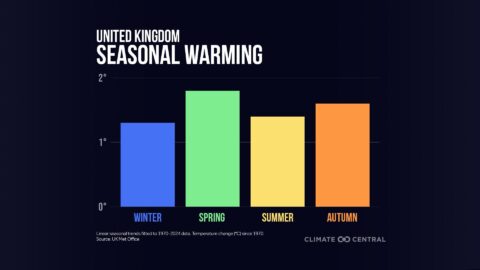
Analysis by Climate Central using data obtained from the UK Met Office’s Climate Research website showed that all four seasons have warmed since 1970, and spring is the fastest-warming season for the UK as a whole.
Credit: Climate Central
The seasons will naturally vary year to year, but the general trend is that as the climate warms globally due to human-caused climate change, this is influencing long-term warming trends in our seasons.
The analysis looked at the annual average seasonal temperatures from 1970-2024 for all four meteorological seasons. The seasons were defined as:
– Winter: 1st December – 28/29th February
– Spring: 1st March – 31st May
– Summer: 1st June – 31st August
– Autumn: 1st September – 30th November
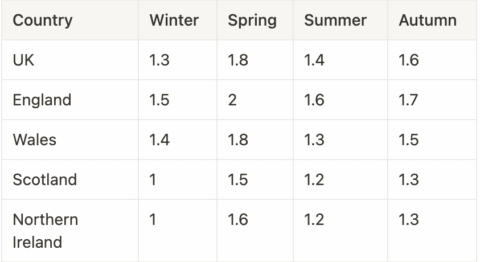
Spring was the fastest warming season for the UK as a whole, with the average spring temperature having increased 1.8C since 1970, but this isn’t just the case for the UK. In fact for all four nations, spring is the fastest warming season. England has seen the most spring warming, with the average temperature having increased 2C since 1970. Wales has seen the average temperature for spring increase 1.8C since 1970, Northern Ireland 1.6C and Scotland 1.5C.
For the UK, the average winter temperature has increased 1.3C since 1970, summer has increased 1.4C and autumn 1.6C.
This table shows how much the seasonal average temperatures (in Celsius) have increased since 1970.
Credit: Climate Central
Now let’s break the UK down and look at things on a national level.
Scotland
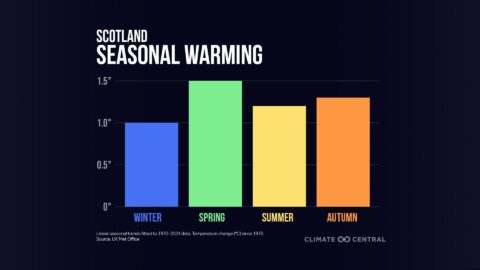
Scotland has seen all four seasons warm since 1970, and like for the UK as a whole spring is the fastest warming season. The average spring temperature for Scotland has increased 1.5C since 1970. The other months have all warmed at least 1C since 1970. The average temperature for winter has increased 1C, summer 1.2C and autumn 1.3C.
Credit: Climate Central
Wales
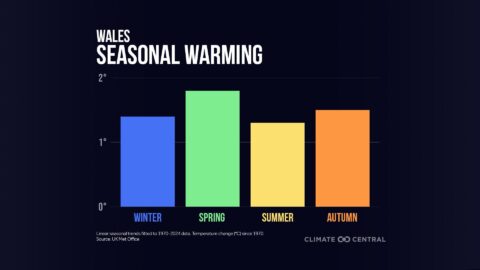
Spring is also the fastest warming season for Wales. The average spring temperature has increased 1.8C since 1970. The other seasons have all warmed more than 1C since 1970. The average temperature for winter has increased 1.4C, summer 1.3C and autumn 1.5C.
Credit: Climate Central
Northern Ireland
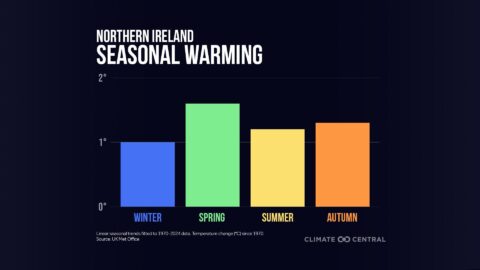
For Northern Ireland all four seasons have warmed at least 1C since 1970. Spring is the fastest warming season with the average spring temperature having increased 1.6C since 1970. The average temperature for winter has increased 1C, for summer 1.2C and 1.3C for autumn.
Credit: Met Office
Credit: Met Office
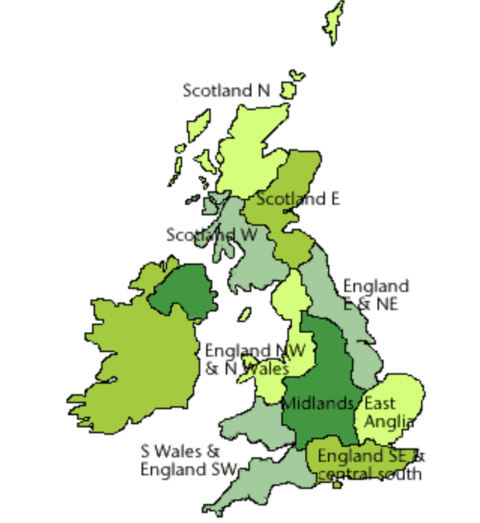
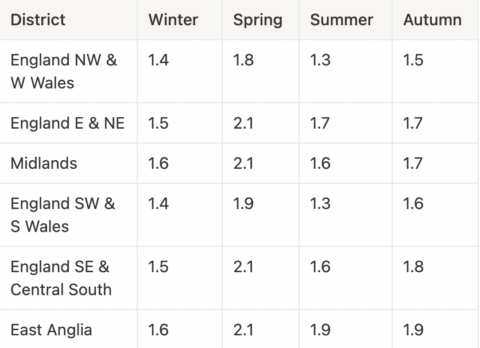
Using the Met Office climate districts (see map), the analysis by Climate Central also showed that for all regions of England, spring is the fastest warming season. Four regions tied for the most spring warming — SE & Central South England, the Midlands, East Anglia, and E & NE England — each seeing their spring average temperature increase by 2.1°C since 1970.
This table shows how the average temperature (in Celsius) for each season has increased since 1970 for different regions of England and Wales.
What are the impacts of warming seasons?
The changes in our seasons have widespread impacts, including on wildlife and nature. For example, spring flowers in the UK are now flowering around a month earlier due to climate change. The earlier flowering can have big consequences for wildlife, ecosystems, agriculture and gardeners. Some species synchronise their migration and hibernation with the timing of the plants and flowers flowering and if they are flowering earlier than these species can be left without the flowers and plants that they rely on. This is a phenomenon known as ecological mismatch and can lead to biodiversity loss if populations cannot adapt quickly enough.
There are also impacts for farmers and gardeners, for example if fruit trees flower early following a mild winter, then entire crops can be killed off if they are hit by a late frost.
The fact that our seasons are warming means that we are also seeing changes in the weather. For example, the fact that we are seeing warmer winters means that there are fewer overnight frosts.
So not only does the change in our seasons impact us, but there are also wider impacts on the world around us.
Seasons UK
← Back